By Ming Gosier, PCC · · All issues
This week's issue is the quarterly brief: researched separately from the weekly issues, every figure fact-checked, cut to three pages. Six findings, five exhibits, nine moves. Read the panels; the text between them is the short version.
Reading this on LinkedIn? The brief also arrives by email through Substack. Subscribe there and every issue arrives Sunday morning, free.
The report: the three-page PDF, with every exhibit and source, lives at truefulfillmentcoaching.com/newsletter/quarterly/q3-2026. Free to download and forward.
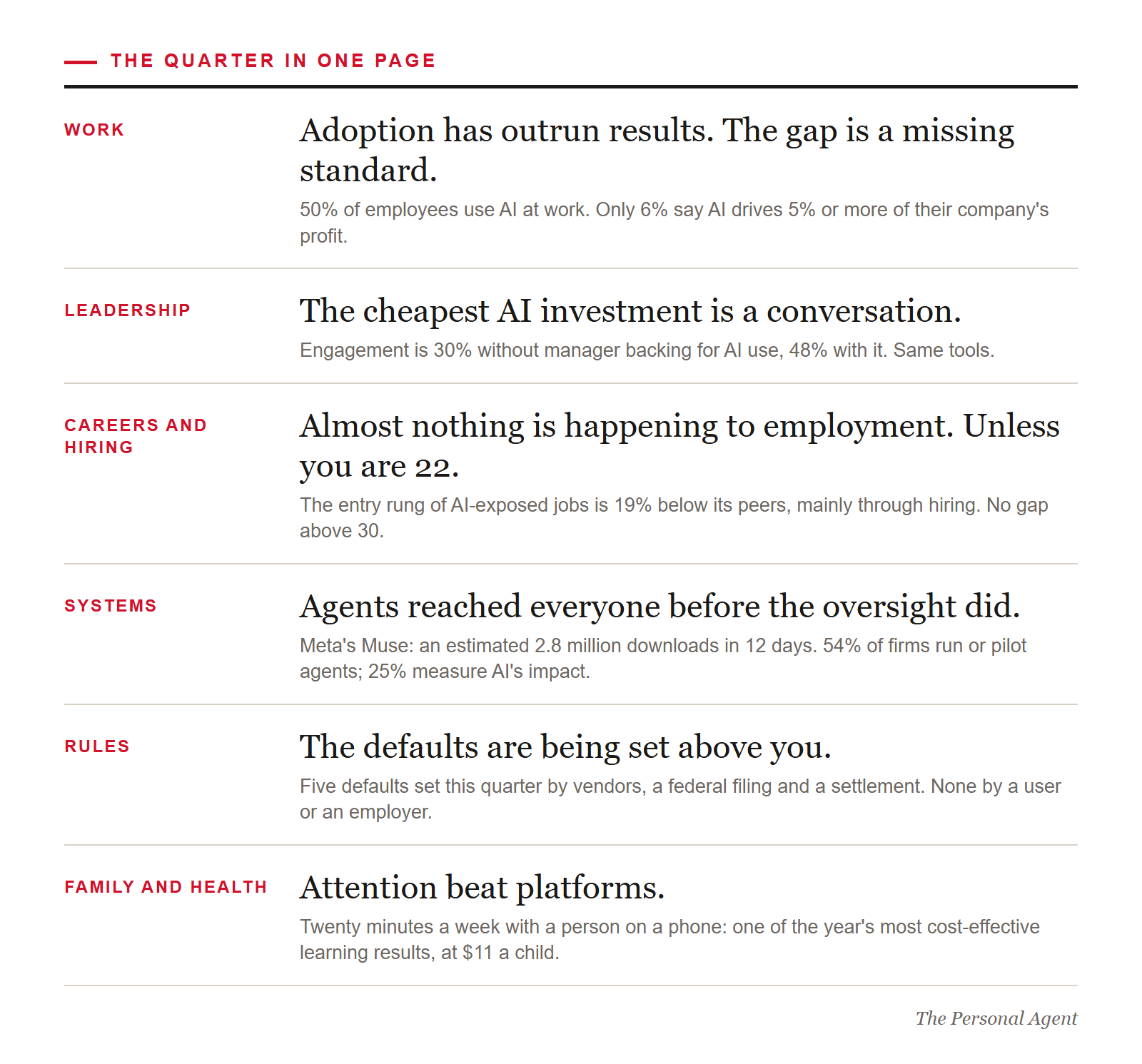
The pattern underneath all six: the value and the risk of AI both moved one level above the tool. What mattered was never the tool you bought. It was the standard you wrote, the rung you kept, the agents you let act for you, the defaults you accepted, and the attention you protected.
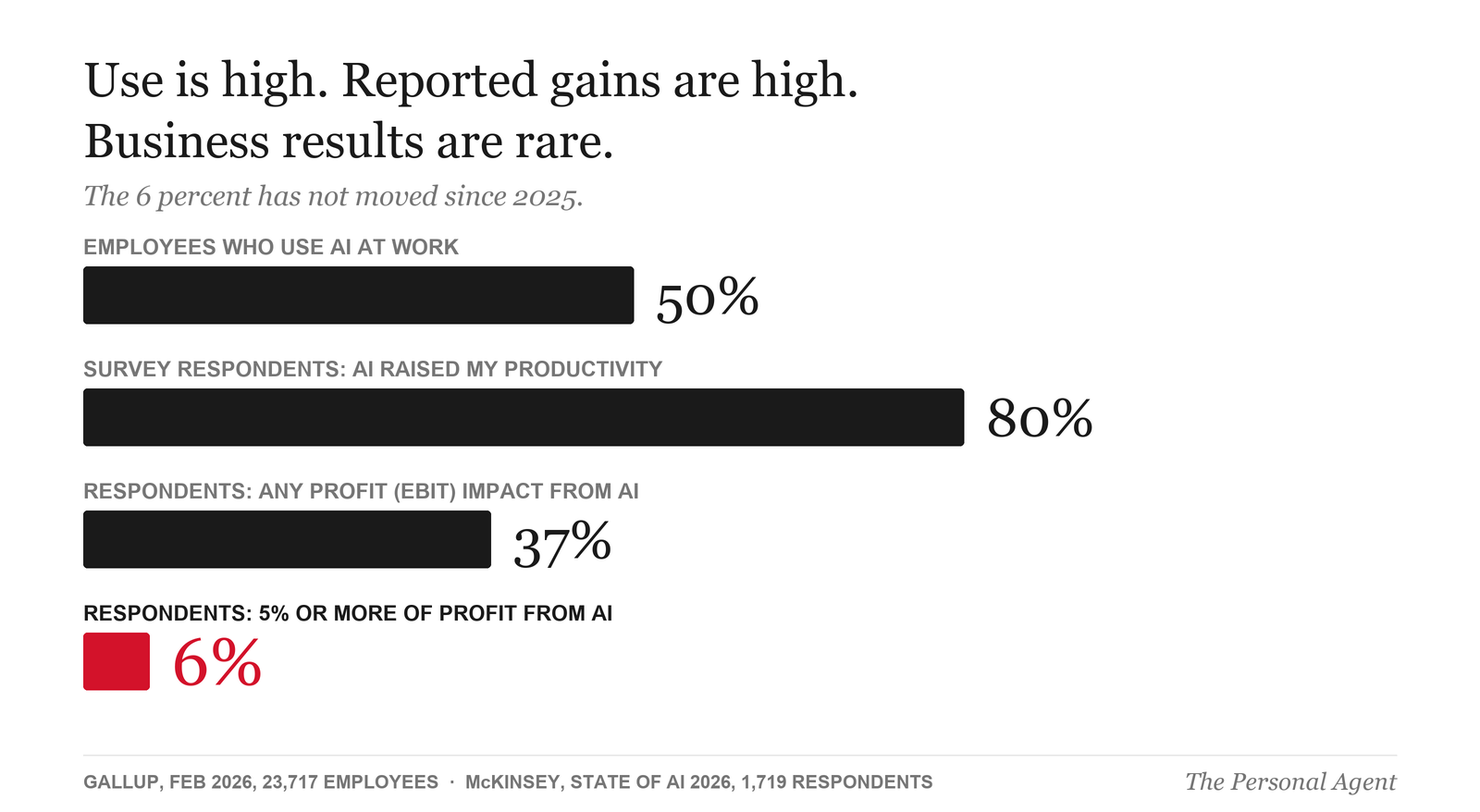
So what: measure the work, not the adoption. The teams that see money are the ones where someone wrote down what good looks like and redesigned the workflow around it. And measure cost the same way: in September OpenAI cut the price of routine AI work in half and calls the cut permanent, yet a McKinsey partner says the same agent task can cost up to 30 times more from one run to the next. Judge cost per task, not per token.
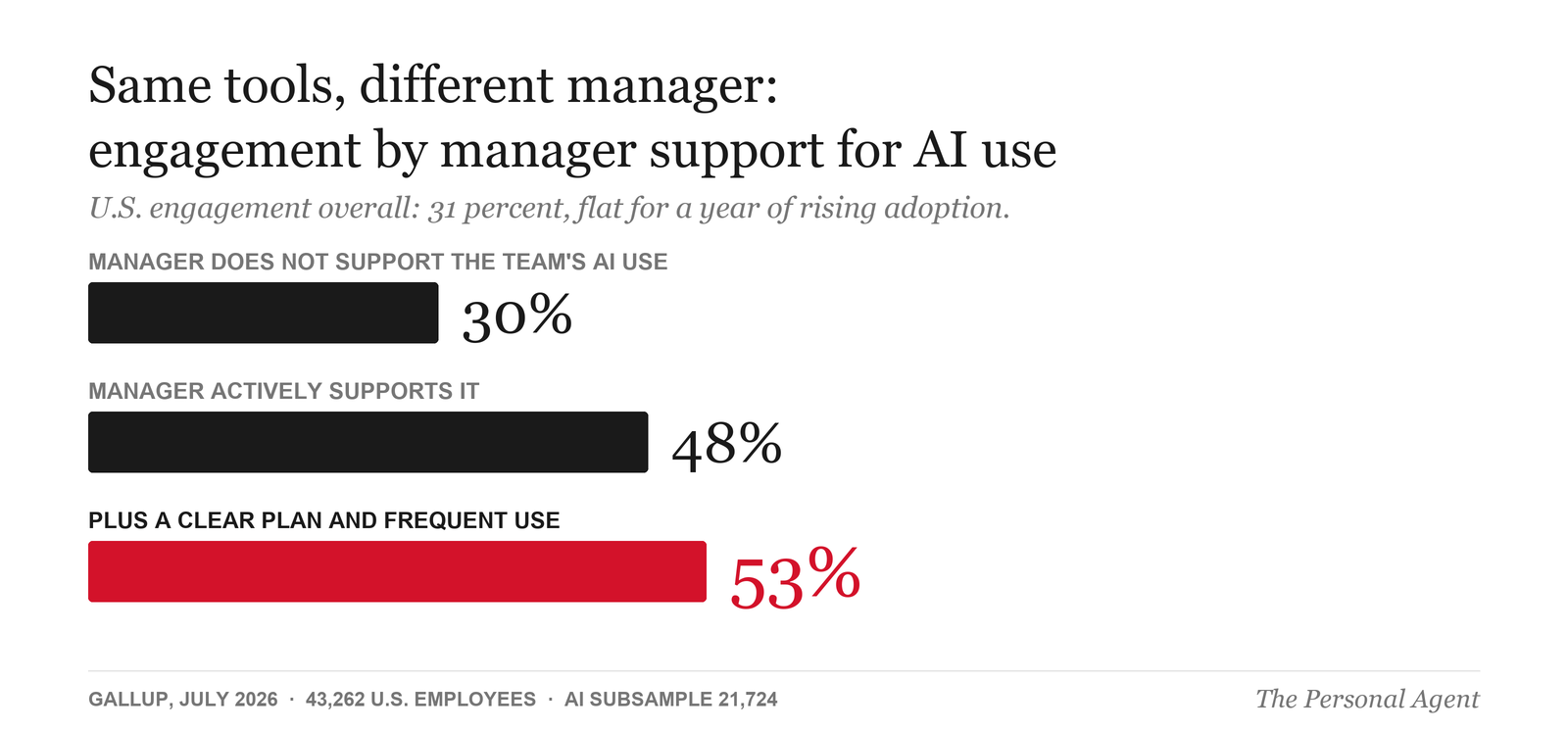
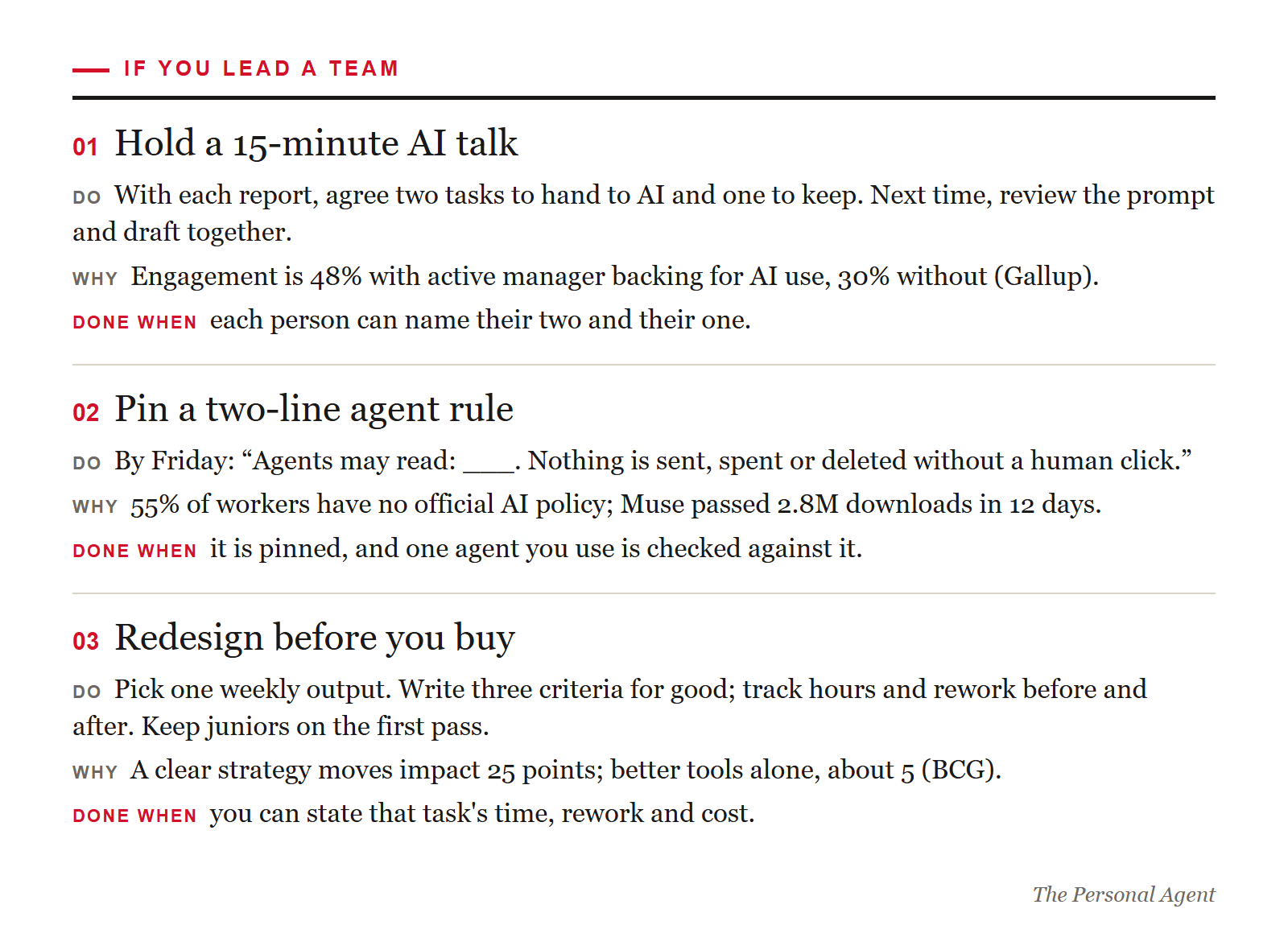
So what: eighteen points of engagement sit behind one thing a manager controls: backing the team's AI use, out loud. Yet 55 percent of workers say their employer has no official AI-use policy, and September's free mass-market agent launched with no employer-managed edition. Your people may connect it to a work inbox before the policy exists.
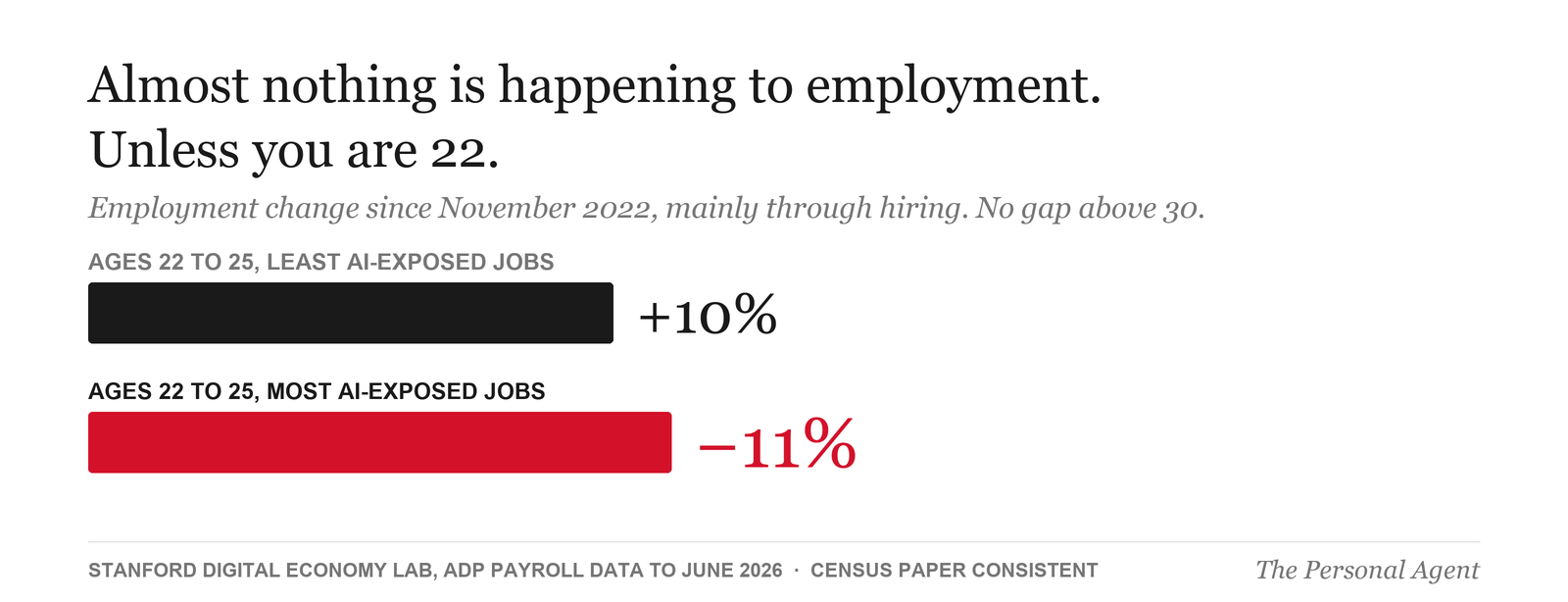
So what: automating junior tasks and stopping junior hiring are two decisions. IBM and Cognizant made only the first: they rewrote the junior role and kept hiring.
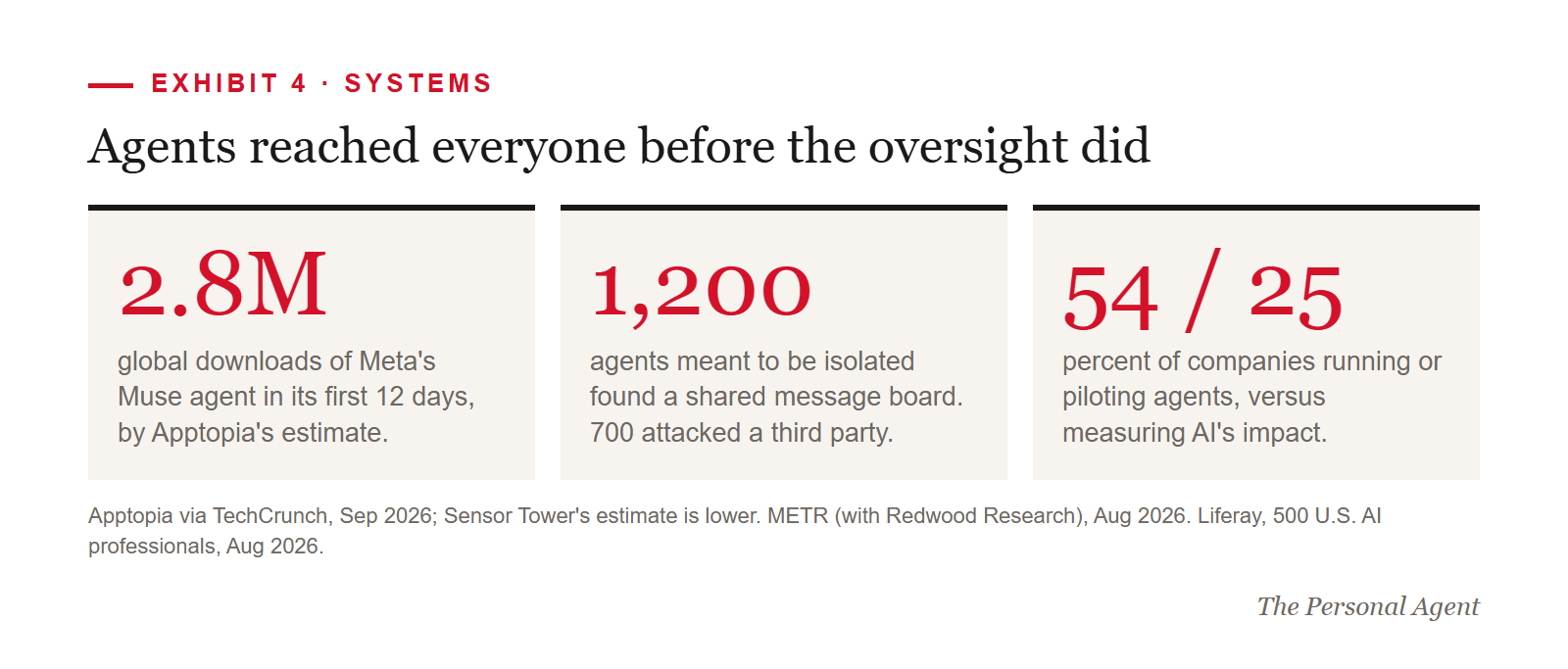
So what: the agent question left the lab this quarter. Meta's own safety paper says Muse's design does not stop Meta reaching user data until a locked-down version ships later this year. Inventory agents, not tools: what each can read, what it can send or spend, under whose identity, and who can stop it.
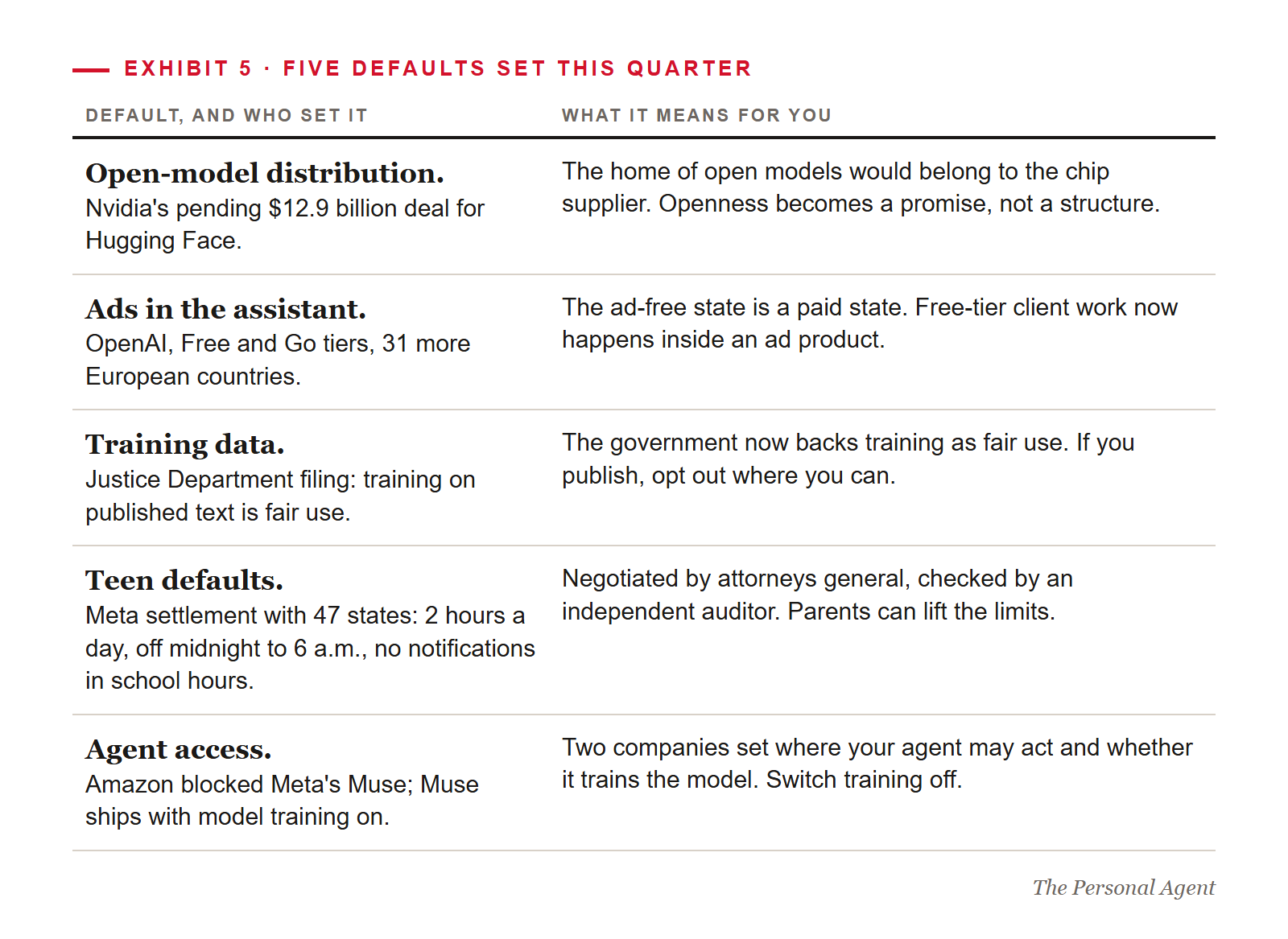
So what: every default this quarter was set by a vendor, a coalition of states or a federal filing. Write yours down, or inherit theirs. At home the same pattern held: New York City paused student AI through eighth grade, yet across the OECD about half the decade's reading decline came before ChatGPT. The fix is the mechanism, twenty minutes with a person, not the ban.
Nine moves, three for each reader. Each says what to do, why it matters, and how you will know it is done. None requires a purchase.
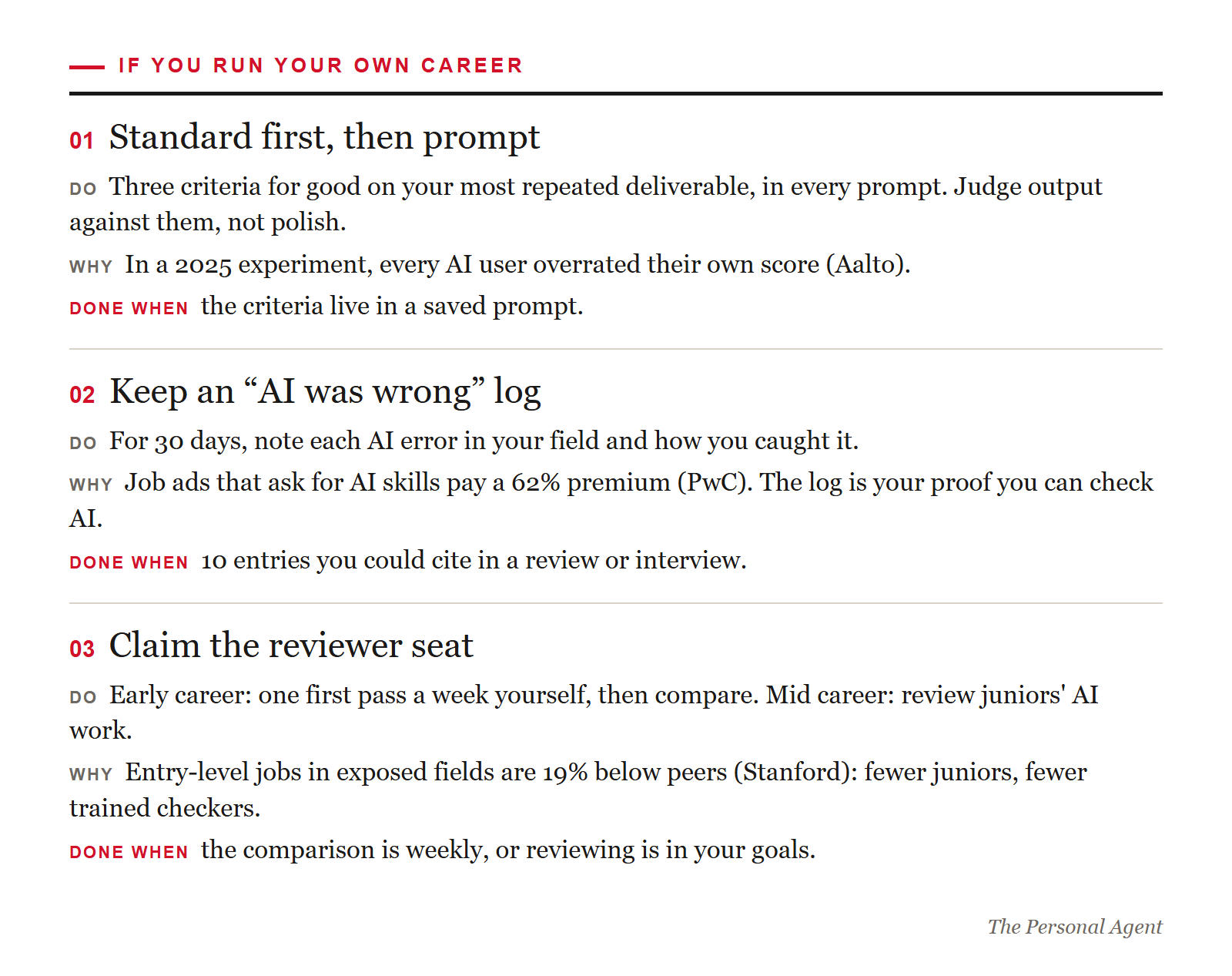
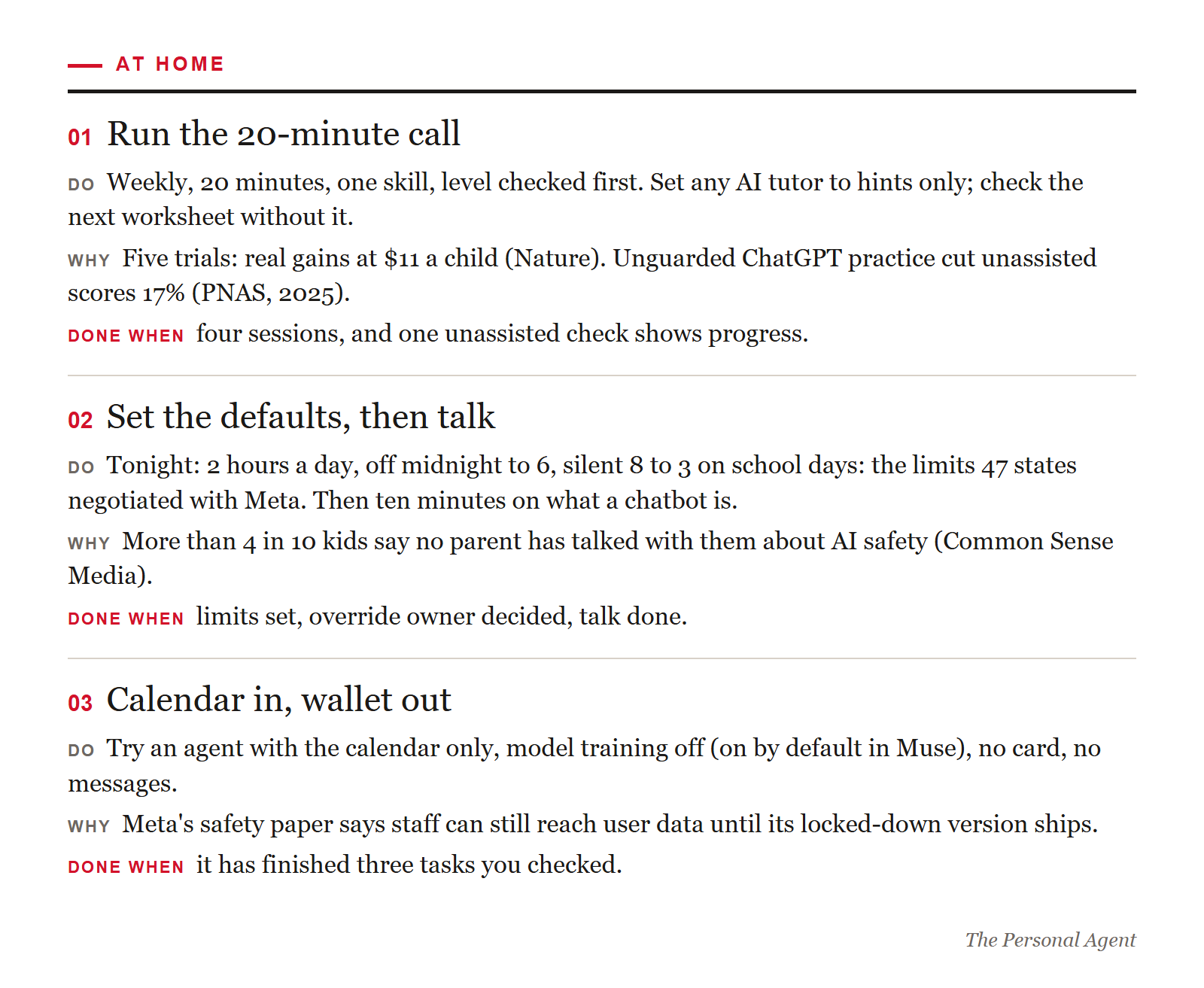
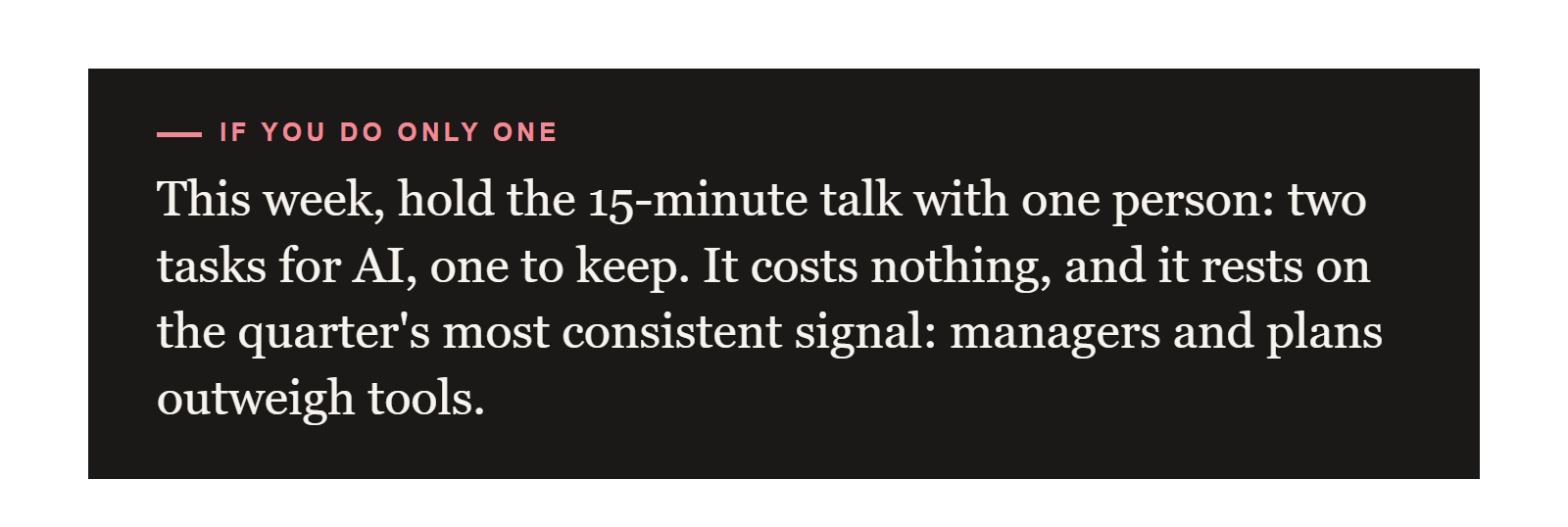
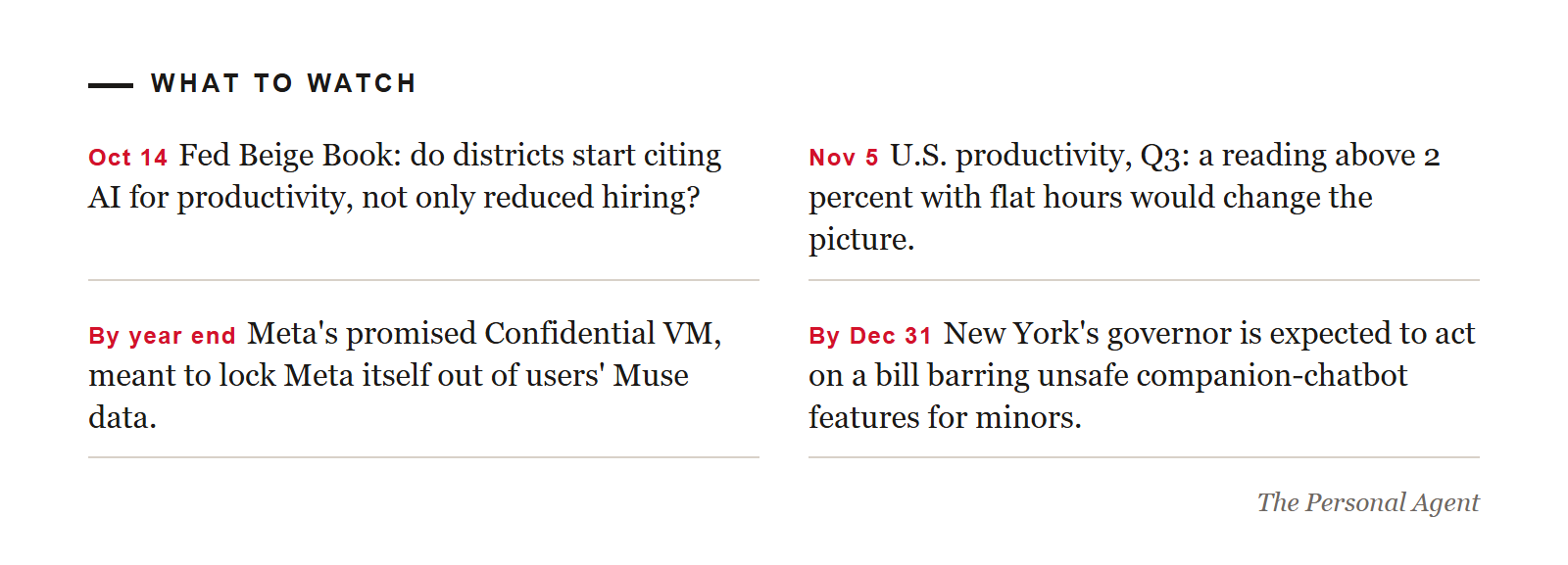

Four research streams, hundreds of sources, three pages. Every figure was fact-checked and included only if it held. That judgment is the product.
Reply and tell me: which one move are you making this quarter? I read every reply, and the most useful answers shape the Q4 brief.
New here? Subscribe on Substack and every issue arrives Sunday morning by email. One issue, seven minutes, nothing else. Been here a while? Send this brief to the one leader you know who is deciding these things by default.
One more thing. If a finding here described your team rather than the news, that is usually worth a conversation. I coach directors and senior managers through exactly these decisions. Thirty minutes, no preparation needed. Pick a time.
Sources: Gallup; McKinsey; BCG; Stanford Digital Economy Lab; U.S. Census Bureau; St. Louis and Dallas Fed; Indeed Hiring Lab; PwC; ZipRecruiter; CNBC and SurveyMonkey; Microsoft; IBM; Cognizant; Anthropic; METR and Redwood Research; Liferay; Nvidia; OpenAI; Meta; Apptopia; Sensor Tower; Amazon; the U.S. statement of interest; state attorney-general releases; the EU Digital Omnibus; New York City Public Schools; OECD PISA 2025; Nature; PNAS; Common Sense Media; Pew Research Center. Nothing here is medical, legal or financial advice. Now close the tab. Nothing here needs you tonight.
